
Views: 0 Author: Site Editor Publish Time: 2026-08-28 Origin: Site


Pneumatic system failures are rarely just mechanical annoyances for commercial fleets. They act as leading drivers of unscheduled downtime. They frequently cause severe Department of Transportation (DOT) compliance violations. Most importantly, they create catastrophic safety risks. A sudden loss of braking power endangers drivers and damages valuable cargo.
Heavy-duty trucks operate in incredibly harsh environments every single day. Their air compressors generate intense heat continuously. They also produce excessive moisture and oil aerosols. If you leave these contaminants unchecked, they aggressively degrade sensitive pneumatic braking systems. Component failure becomes inevitable.
Evaluating and procuring high-quality replacement parts is a critical risk-management decision. It represents far more than a routine maintenance expense. In this guide, we explore how proper maintenance protects your fleet. You will learn how to optimize component lifespans and maintain rigorous safety standards across your operations.
Air dryers act as the first line of defense, stripping moisture and oil before they can corrode sensitive downstream brake valves.
Failing to replace compromised air system components leads to frozen air lines, delayed braking response, and costly roadside service calls.
When evaluating replacements, buyers must prioritize coalescing capabilities, purge valve reliability, and warranty backing over lowest upfront cost.
Proactive replacement based on duty-cycle rather than absolute failure ensures continuous fleet compliance and predictable maintenance budgets.
Moisture accumulation severely compromises commercial braking efficiency. When water enters the air system, it directly threatens DOT compliance. Commercial Vehicle Safety Alliance (CVSA) inspectors actively look for air system defects during Level 1 audits. If they find degraded braking performance, they will issue out-of-service violations. These violations ground your trucks immediately. They ruin delivery schedules and damage your carrier safety rating.
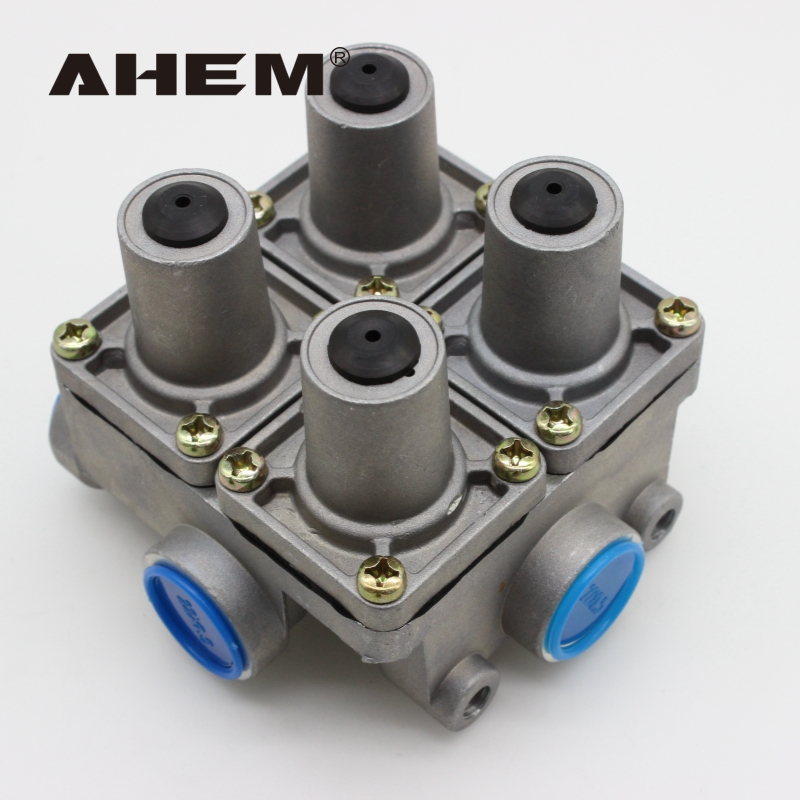
Pneumatic degradation rarely happens in isolation. It triggers a predictable chain reaction. A failing desiccant cartridge allows water and oil to pass freely. These contaminants flow directly into your Brake Valves. The oil strips away factory lubrication. The water corrodes internal metal surfaces. Together, they accelerate O-ring degradation. Once these seals tear, the valves leak massive amounts of air.
Cold climates amplify the dangers of neglected air systems. When air dryers fail to eject moisture adequately, water pools in the lines. When temperatures drop below freezing, this water turns to ice. Ice physically blocks relay valves and air lines. Drivers may step on the pedal and get zero brake application. Alternatively, the brakes might lock up entirely. Both scenarios create immense highway hazards.
You must weigh predictable maintenance against compounding breakdown costs. Buying a high-quality replacement valve is a known, manageable expense. Purchasing a premium desiccant cartridge is highly affordable. Conversely, a roadside breakdown is financially devastating. You pay for emergency towing, roadside labor rates, and delayed freight penalties. Proactive parts replacement keeps your maintenance budgets highly predictable.
The braking cycle begins at the engine-driven compressor. The compressor produces hot, wet, and oily air. This air travels through the discharge line and cools slightly. Next, it enters the purification stage. Here, Air Dryers act as the ultimate gatekeepers. They route the air through a dense desiccant bed. This material aggressively strips water vapor and traps oil droplets.
The purification process requires continuous regeneration to function properly. This brings us to the critical purge cycle. When the air system reaches its maximum pressure, the compressor unloads. The purge valve at the base of the dryer snaps open. It forcefully expels all collected water, oil, and debris onto the road. A reliable purge valve is absolutely essential for system health.
Downstream components demand perfectly clean, dry air to operate safely. Foot valves, relay valves, and dash control valves meter air pressure precisely. They translate driver inputs into mechanical braking force. If they receive contaminated air, their internal pistons stick. You will experience dangerous lagging. Clean air ensures they open and close with immediate precision.
Pneumatic components share a deeply symbiotic relationship. You cannot isolate one from the other. Investing in premium downstream valves is completely futile if your upstream components fail. An exhausted dryer will actively feed new valves with destructive oil sludge. You must maintain both sides of the equation. This synergy guarantees reliable stopping power.
Daily inspections provide the clearest view of system health. Drivers must pull the lanyard on the primary wet tank daily. If they see water spray, you have a problem. If they see a milky oil sludge, your primary defense has failed. This is a definitive sign of desiccant exhaustion. You must schedule a replacement immediately.
Listen closely to how often your compressor engages. Rapid cycling indicates a serious internal issue. Often, a clogged desiccant cartridge creates excessive backpressure. Alternatively, a worn purge valve might be leaking air continuously. Both scenarios force the compressor to overwork. This leads to premature compressor failure. You need an immediate diagnostic check.
Continuous hissing from under the cab is a red flag. Relay valves and foot valves have dedicated exhaust ports. They should only release air when the driver releases the brakes. If they hiss constantly, they suffer from internal seal failure. Oil contamination usually causes this degradation. You must replace the affected valve promptly.
Brake pedal feel tells a vital diagnostic story. If drivers report a noticeable pedal lag, pay attention. If they complain about dragging brakes, act fast. These are late-stage symptoms of severe valve restriction. The internal pistons are sticking due to contamination or corrosion. This requires immediate shop time. You cannot ignore sluggish response.
Procurement teams face a constant choice between OEM and aftermarket parts. OEM components offer undeniable reliability. They guarantee exact-fit installation. However, certified high-tier aftermarket alternatives offer excellent cost-efficiency. They often meet or exceed OEM specifications. You must carefully weigh these options. Avoid unbranded, ultra-cheap parts completely. They pose unacceptable safety risks.
Evaluation Criteria | OEM Components | Premium Aftermarket | Low-Tier Aftermarket |
|---|---|---|---|
Fitment Guarantee | Exact match, seamless install | High compatibility, exact fit | Inconsistent, possible modification |
Cost Profile | Highest upfront investment | Moderate, high value | Lowest upfront, highest risk |
Quality Control | Rigorous factory testing | Certified industry standards | Unverified, high failure rate |
Warranty Coverage | Comprehensive, nationwide | Strong, vendor-specific | Minimal or non-existent |
Standard desiccant removes water vapor efficiently. However, modern engines run hotter and produce more oil vapor. We strongly recommend specifying coalescing cartridges. These filters use advanced fiberglass layers. They physically separate microscopic oil aerosols before they reach the desiccant bed. This protects the desiccant. It also protects every downstream valve in your fleet.
Your operating environment dictates your material requirements. Trucks in northern regions face heavy road salt. You must prioritize corrosion-resistant housings. Furthermore, you must verify the built-in heater configurations. Ensure the 12V or 24V heater matches your fleet's electrical architecture. A failed heater guarantees frozen lines during the next winter storm.
A trusted supplier is just as important as the part itself. Advise your procurement team to shortlist reputable vendors. Look for transparent warranty terms. Demand clear return policies. Verify their part-number cross-referencing capabilities. This prevents costly procurement errors. Trustworthy suppliers stand behind their products when failures occasionally happen.
Technicians often debate how much to replace. A standard cartridge swap is perfect for routine, scheduled maintenance. However, visual inspections might reveal deeper issues. If the housing threads are heavily corroded, stop. If the base purge valve is malfunctioning, do not just change the filter. You must replace the entire assembly to guarantee system integrity.
Over-torquing fittings: Technicians often apply too much force. This strips threads and cracks cast aluminum housings.
Pinching O-rings: Failing to lubricate the primary seal often leads to pinched O-rings. This causes immediate, massive air leaks.
Ignoring the heater harness: Technicians sometimes forget to plug in the electrical connector. This leaves the unit completely vulnerable to freezing.
Using dirty tools: Introducing shop dirt into open air lines defeats the purpose of the repair.
You must abandon "run-to-failure" maintenance models completely. Adopt proactive, duty-cycle-based replacement schedules. Standard linehaul trucks might only need a new cartridge every two to three years. They cruise on highways with minimal braking. Conversely, vocational trucks like refuse haulers or city buses brake constantly. They consume massive amounts of air. They often require replacement every six to twelve months.
You cannot return a vehicle to service without testing. Outline essential verification steps for your technicians. First, start the engine and monitor the dash gauges. Verify the compressor cuts in around 100 psi. Ensure it cuts out between 120 and 130 psi. Listen for the forceful actuation of the purge valve. Finally, apply the brakes firmly. Listen for any abnormal hissing from the newly serviced components.
Pneumatic system components are foundational to commercial vehicle safety. They exist in a highly symbiotic relationship. The purification components protect the control components. Together, they ensure operational uptime and predictable stopping power. Ignoring their maintenance schedules exposes your fleet to unacceptable liabilities.
We urge fleet decision-makers to take immediate action. Audit your current maintenance logs today. Look for recurring pneumatic issues or frequent roadside service calls. If you spot a trend, transition your fleet to coalescing-grade replacements immediately. This single upgrade yields massive reliability improvements.
Do not wait for a DOT violation or a winter breakdown. Browse specific component catalogs now. Cross-reference your OEM part numbers accurately. Contact a technical sales representative to discuss bulk fleet procurement. Proactive investment always beats reactive crisis management.
A: Replacement intervals depend entirely on the vehicle's duty cycle. Standard linehaul highway trucks typically require a new cartridge every 24 to 36 months. Vocational vehicles, such as refuse trucks or city transit buses, use air constantly. They usually need a replacement every 12 months. Some severe applications require changes every 6 months.
A: Frequent purging usually indicates a problem beyond normal operation. It often points to systemic air leaks downstream. If your system leaks, the compressor must run constantly to maintain pressure. Additionally, a faulty governor might send incorrect signals. Finally, the purge valve itself might be stuck open due to debris.
A: While rebuild kits exist, we highly recommend complete replacement for safety-critical valves. Rebuilding takes significant shop time. It also introduces the risk of human error during assembly. Installing a brand-new, factory-tested unit provides guaranteed reliability. It ensures maximum safety and reduces the chances of repeat failures.
A: A standard unit primarily removes water vapor using desiccant. A coalescing unit features an additional filtration layer. This specialized layer traps microscopic oil aerosols pushed by the compressor. It prevents oil from coating the desiccant. Most importantly, it stops oil from traveling downstream and destroying rubber seals in your control valves.
