
Views: 0 Author: Site Editor Publish Time: 2026-09-01 Origin: Site


Pneumatic braking relies heavily on air compressors to generate massive stopping power for heavy vehicles. However, these compressors inherently produce a dangerous mix of water and oil vapor during normal operation. Without immediate and effective intervention, this moisture travels directly into your sensitive brake lines. This contamination leads to catastrophic valve freeze-ups in extreme winter conditions. It also accelerates internal corrosion year-round, degrading vital system components over time. We must view this filtration component as more than just a strict regulatory compliance requirement. It serves as your primary defense mechanism. It fiercely protects downstream pneumatic valves and heavily minimizes overall vehicle repair expenses. By keeping the air supply completely clean and dry, fleets can effortlessly avoid unexpected and dangerous road breakdowns. You will learn exactly how these intricate systems function and precisely why they fail. We will also comprehensively explore how upgrading your specific cartridges effectively protects modern truck infrastructure.
The primary purpose of an air dryer is to remove moisture, oil vapor, and solid contaminants before they enter the air brake reservoirs.
Operating with a compromised air dryer accelerates valve corrosion, increases winter freeze-up risks, and leads to DOT compliance violations.
Upgrading to oil-coalescing desiccant cartridges significantly extends the life of modern automated manual transmissions (AMTs) and emissions controls.
Preventative maintenance and replacement should be dictated by fleet application (vocational vs. line-haul) rather than static mileage intervals.
Unfiltered air compromises your entire braking infrastructure. Air compressors constantly pull in atmospheric air. This raw air naturally contains humidity and microscopic debris. The compression process creates significant heat. As this heated air travels away from the compressor, it rapidly cools down. This sudden temperature drop forces the humidity to condense into liquid water. Furthermore, even well-maintained compressors leak small amounts of lubricating oil past their piston rings. We call this phenomenon compressor blow-by.
When liquid water mixes alongside heated oil vapor, a destructive chemical reaction occurs. They emulsify to create a thick, highly acidic sludge. This heavy sludge poses a severe physical threat to your braking system. It aggressively attacks rubber O-rings, degrades synthetic seals, and physically blocks delicate relay valves. Sludge prevents valves from seating properly. This leads directly to dangerous air leaks and heavily compromised stopping distances.
System integration plays a vital role here. Engineers specifically install Air Dryers directly between the air compressor and the primary wet tank. This strategic placement creates an absolute firewall. The unit intercepts the hot, contaminated air before it can ever reach the primary reservoir. By catching the sludge-forming ingredients early, you protect every downstream component.
Industry regulators take this clean air requirement very seriously. The FMCSA and CVSA maintain strict guidelines regarding moisture accumulation inside air tanks. During standard roadside inspections, officers routinely drain wet tanks to check for system health. If an inspector finds excessive water or oil discharging from your reservoirs, they will issue violations. Severe fluid buildup frequently triggers immediate out-of-service orders. A properly functioning filtration system automatically prevents these costly regulatory penalties while ensuring maximum braking safety.
Understanding the internal mechanics helps you diagnose problems faster. The core functionality revolves around three distinct operational phases. These phases work together seamlessly to guarantee a continuous supply of bone-dry air.
The first phase is the charge cycle. The system routes hot, compressed air upward through a tightly packed desiccant bed. This bed contains millions of microscopic silica gel beads. We must clarify an important scientific distinction here. Desiccant does not absorb moisture like a kitchen sponge. Instead, it adsorbs moisture. Adsorption means water molecules physically adhere to the outer surface of the silica beads. The beads never change shape or swell. They simply trap the water molecules while allowing the dry air to pass through to the tanks.
The second phase involves the purge cycle. The desiccant bed cannot hold infinite amounts of water. It requires regular regeneration. Your system governor constantly monitors the air pressure inside the main tanks. Once the pressure reaches the predetermined cut-out limit (typically around 130 psi), the governor sends a control signal. It pneumatically triggers the purge valve located at the base of the unit. The valve abruptly opens to the atmosphere. This sudden depressurization reverses the internal airflow. Dry air stored inside a dedicated purge volume violently expands. It rushes backward through the desiccant bed. This aggressive reverse flow strips the trapped water molecules off the silica beads. The system swiftly expels this moisture out onto the ground.
The third critical component is the heater element. Cold weather operations introduce severe freezing hazards. As the unit expels wet air, this moisture can easily freeze around the exhaust port. A frozen, stuck-open purge valve rapidly drains your entire air system. A frozen, stuck-closed valve completely halts the regeneration process. Manufacturers solve this by integrating a robust 12V or 24V thermostat-controlled heater directly into the base housing. This element automatically activates when ambient temperatures drop. It constantly melts away condensation, preventing dangerous winter ice blockages.
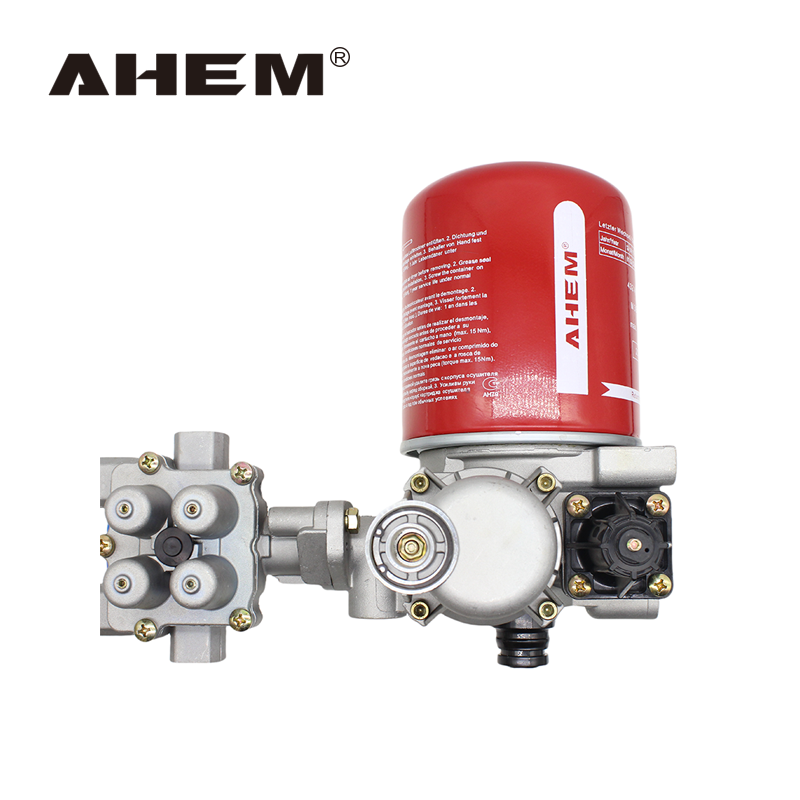
Ignoring basic filtration maintenance triggers a chain reaction of cascading hardware failures. When the desiccant bed finally saturates, it stops trapping moisture entirely. Wet, oily air floods past the cartridge. It fills your primary and secondary reservoirs. This moisture then migrates into your ABS modulators, brake chambers, and transmission shift solenoids. Rust begins forming inside steel components immediately. Rubber diaphragms swell and rupture.
You must implement a strict symptom diagnostic framework to catch these failures early. Catching warning signs prevents minor issues from becoming roadside emergencies. Look for these highly specific warning indicators:
Water in the wet tank: Drivers should drain their wet tank lanyards daily. If you observe noticeable water spraying out, you have definitive proof of desiccant failure. The cartridge requires immediate replacement.
Excessive oil passing: Finding heavy, milky oil in your tanks indicates a larger mechanical problem. It often means your compressor blow-by has wildly exceeded the cartridge's filtration capacity. This strongly signals an impending compressor failure.
Constant purging or air leaks: If the unit continuously spits air every few minutes, you likely have a sticking purge valve. This can also point toward a failed turbo cut-off valve or a defective governor.
The financial impact of ignoring these symptoms is staggering. We must contrast the fundamental costs involved. Purchasing a premium replacement cartridge requires a very modest investment. Replacing damaged downstream components costs exponentially more. A single corroded ABS modulator valve will heavily outweigh the price of a dozen maintenance cartridges. Factor in the astronomical fees associated with emergency roadside towing and forced downtime. Preventative replacement represents the most financially responsible strategy for fleet managers. Keeping the air clean protects your bottom line just as effectively as it protects your drivers.
The heavy-duty market offers multiple solution categories for replacement parts. Choosing the correct filtration technology heavily dictates the lifespan of your vehicle. You generally choose between two primary options: standard cartridges and oil-coalescing cartridges.
Feature | Standard Desiccant | Oil-Coalescing Technology |
|---|---|---|
Primary Function | Moisture adsorption | Moisture adsorption + oil aerosol filtration |
Internal Structure | Single silica gel bed | Pre-filter layers followed by silica bed |
Ideal Application | Older, mechanical-only vehicles | Modern fleets with AMTs and emissions controls |
Protection Level | Basic water removal | Comprehensive chemical and fluid protection |
Standard desiccant filters serve perfectly well for older, mechanically simple braking configurations. They focus strictly on moisture removal. These units lack the internal structures needed to capture fine oil mist. If an older truck utilizes manual transmissions and basic pneumatic brakes, a standard cartridge provides adequate daily protection.
However, oil-coalescing technology has rapidly become the strict OEM standard across the trucking industry. Major manufacturers utilize this technology because it physically filters oil aerosols before they ever reach the desiccant bed. The cartridge contains specialized fiberglass layers. These layers force microscopic oil droplets to collide and merge (coalesce) into larger drops. Gravity then pulls this trapped oil down toward the purge valve for safe expulsion.
Modern trucks absolutely require this advanced oil-coalescing capability. Automated manual transmissions (AMTs) rely entirely on complex pneumatic solenoids to shift gears precisely. Advanced emissions control systems use air to inject diesel exhaust fluid. These highly sensitive mechanisms demand perfectly oil-free air to function correctly. Even a microscopic layer of oil will jam these precision solenoids.
System compatibility remains crucial when ordering replacements. You must actively cross-reference your OEM part numbers. Downgrading from an oil-coalescing filter back to a standard filter introduces severe operational risk. Quality Air Dryers designed for coalescing applications cannot protect AMT components if you install a cheaper standard cartridge inside them. Always maintain the filtration standard originally specified by the truck manufacturer.
You should never rely on random guesswork for maintenance. Successful fleets utilize strictly evidence-oriented scheduling. You must base your replacement intervals entirely on your specific vehicle application rather than static, universal mileage numbers. Different duty cycles subject compressors to vastly different workloads.
Line-Haul and Highway Operations: These trucks drive long distances with minimal braking events. The compressor runs infrequently. Therefore, you can safely schedule cartridge replacements every two to three years. This equates roughly to every 200,000 to 300,000 miles.
Vocational, Refuse, and Transit Operations: Garbage trucks and city buses stop constantly. They operate specialized pneumatic equipment heavily. This creates incredibly high compressor duty cycles. For these heavy-use applications, you must mandate aggressive one-year or 100,000-mile replacement intervals.
Strategic timing greatly improves your preventative maintenance outcomes. Fall represents the absolute best time for winterization preparation. You should strategically replace cartridges right before freezing temperatures arrive. A brand-new desiccant bed guarantees maximum moisture removal during the most dangerous weather conditions. Furthermore, mechanics must actively test the purge valve heater element during this fall service to ensure it draws proper amperage.
When preparing to purchase replacement components, follow a strict shortlisting logic. First, verify your specific system thread sizes, as right-hand and left-hand threads vary by manufacturer. Second, clearly determine your strict requirement for coalescing filtration versus standard filtration. Finally, ensure you procure a complete service kit. A proper kit should always include brand-new replacement O-rings and fresh mounting hardware to guarantee a leak-proof seal.
We must definitively abandon the dangerous idea of treating filtration components as run-to-failure parts. They represent crucial preventative insurance for your entire air management system. By actively stripping moisture and oil from the supply lines, these units shield your expensive downstream valves from rapid deterioration. They physically prevent catastrophic winter brake freezes and ensure strict DOT regulatory compliance at weigh stations.
Take immediate actionable steps to protect your fleet today. Instruct your drivers to manually drain their wet tanks after their next shift. If they observe excessive moisture or milky oil, you must immediately consult your fleet specifications. Procure the correct replacement cartridge immediately and swap it out before minor contamination turns into a major roadside breakdown.
A: Constant spitting or rapid cycling usually indicates a severe mechanical air leak. The purge valve seal may have worn out, preventing it from seating fully. Additionally, a defective system governor might be sending erratic pressure signals, confusing the unit. You should inspect the governor lines and replace the purge valve assembly.
A: You should only bypass the unit as an absolute last resort emergency measure to move the truck to a safe shoulder. Bypassing sends raw, unfiltered water and oil directly into your brake chambers. Prolonged driving in a bypassed state will permanently damage your entire pneumatic infrastructure and cause severe brake failure.
A: You do not strictly need a branded OEM box, but you must demand OEM-level quality. Prioritize premium desiccant quality and verified oil-coalescing capabilities over just the brand name. Ultra-cheap aftermarket knockoffs frequently use inferior silica beads that shatter under pressure, clogging your brake lines with dangerous debris.
A: A standard cartridge does not reliably remove oil; it only removes water vapor. However, an oil-coalescing cartridge explicitly filters out oil aerosols. It uses specialized pre-filter layers to trap microscopic oil mist before it reaches the drying bed, ensuring bone-dry and oil-free air for sensitive components.
