
Views: 0 Author: Site Editor Publish Time: 2026-06-03 Origin: Site


Condensation in compressed air systems is never an operational inevitability. Instead, it acts as a measurable operational liability for any modern facility relying on pneumatic power. Ignoring this hidden threat leads directly to sudden equipment failure and unplanned downtime.
When compressors draw in ambient air, the compression process drastically reduces the air's capacity to hold water vapor. As this pressurized air travels and cools downstream, the trapped vapor quickly condenses into liquid water. This liquid introduces severe corrosion, continuous lubricant washout, and dangerous freezing risks into your entire pneumatic network.
Moving away from reactive component replacements toward a proactive infrastructure defense requires implementing the correct Air Dryer. This comprehensive guide breaks down the exact evaluation criteria, system sizing standards, and implementation realities. You will discover exactly how to protect your critical assets and maintain seamless, efficient daily operations.
Unmitigated moisture degrades pneumatic actuators, washes away essential tool lubricants, and risks end-product contamination in sensitive manufacturing.
Selecting an air dryer depends heavily on defining your Required Pressure Dew Point (PDP) according to ISO 8573-1 standards.
The primary decision matrix pits the lower CapEx/OpEx of refrigerated dryers against the extreme moisture-removal capabilities (but higher energy cost) of desiccant dryers.
Proper implementation requires accounting for pressure drop penalties and integrating adequate pre- and post-filtration.
Framing the moisture problem requires looking directly at operational downtime, asset lifecycle reduction, and compliance failures. Facilities often underestimate how quickly liquid water destroys internal components. A robust infrastructure defense starts by understanding these exact degradation mechanisms.
Pneumatic cylinders and directional control valves rely heavily on OEM-applied lubricants. Liquid water aggressively washes these lubricants away during normal cycling. Without proper lubrication, internal friction accelerates rapidly. Seals tear prematurely, and cylinder bores score. This forces maintenance teams into endless cycles of replacing failed actuators. You lose valuable production time whenever a critical valve jams.
Moisture wreaks havoc on distribution piping. Condensation inside standard carbon steel piping creates an ideal environment for rust. Over time, this oxidation forms hard pipe scale. Air velocity strips this particulate matter from the pipe walls and carries it downstream. These sharp rust flakes clog small orifices, jam delicate instruments, and blind point-of-use filters rapidly. You end up fighting a continuous battle against particulate contamination.
Certain industries cannot tolerate even microscopic moisture carryover. Consider automotive painting, pharmaceutical packaging, or food processing environments. Water droplets in a paint spray line cause immediate fisheyes and blistering, ruining entire batches. In food and pharmaceutical sectors, moisture promotes bacterial growth. This leads directly to scrapped products and severe regulatory compliance breaches. The operational penalty far exceeds the price of proper drying equipment.
Many facilities route compressed air piping outdoors or through unheated warehouse zones. Residual moisture becomes highly dangerous during winter months. Liquid water pools in low points and freezes solid when temperatures drop. Ice expansion leads to catastrophic pipe bursts. Even small ice blocks will completely choke off air flow, shutting down entire plant sections until the system thaws.
Evaluating the right Air Dryer means contrasting the three main commercial technologies. Each system offers specific functionality, known limitations, and ideal use cases. You must match the technology directly to your environmental demands.
Refrigerated systems serve as the workhorse for standard industrial applications. They provide reliable moisture removal for environments maintaining moderate temperatures.
Mechanism: The system utilizes a mechanical refrigeration circuit. It cools the incoming compressed air to approximately 38°F (3°C). This sudden temperature drop forces the suspended water vapor to condense into liquid. An automated trap drains this liquid. Finally, the system reheats the outgoing air to prevent pipe sweating.
Best For: General manufacturing facilities, standard pneumatic tools, and indoor operations. They excel where extreme sub-zero dew points are unnecessary.
Limitations: They physically cannot achieve dew points below freezing. If the heat exchanger drops below 32°F, the condensate freezes and blocks air flow. They remain highly ineffective for sensitive high-tech applications.
Common Mistake: Installing these units in areas where ambient temperatures drop below freezing. They will fail to protect outdoor piping in winter.
When applications demand completely bone-dry air, facilities turn to desiccant technology. These systems handle the most aggressive moisture removal tasks.
Mechanism: They utilize twin towers filled with porous media, typically activated alumina or silica gel. The media adsorbs water vapor directly from the air stream. While one tower actively dries the air, the other tower regenerates its saturated media by blowing dry purge air over it.
Best For: Electronics manufacturing, medical air systems, food processing, and any environments exposed to freezing temperatures. They easily achieve Pressure Dew Points ranging from -40°F to -100°F.
Limitations: They require significant purge air for regeneration. This constant air consumption drives up energy usage dramatically. They also demand rigorous maintenance schedules to protect the sensitive media.
Membrane technology provides targeted drying without moving parts. They offer incredible flexibility for isolated demand nodes.
Mechanism: The unit houses thousands of permeable hollow fibers. As compressed air passes through, water vapor permeates the fiber walls and escapes to the atmosphere. A small amount of dried sweep air carries the moisture away.
Best For: Isolated machines, mobile equipment, or specific work cells. They deliver low dew points exactly where needed without powering a massive facility-wide desiccant system.
Limitations: They handle much lower flow capacities compared to industrial units. Furthermore, they require exceptional pre-filtration. Even tiny amounts of compressor oil will permanently foul the delicate membranes.
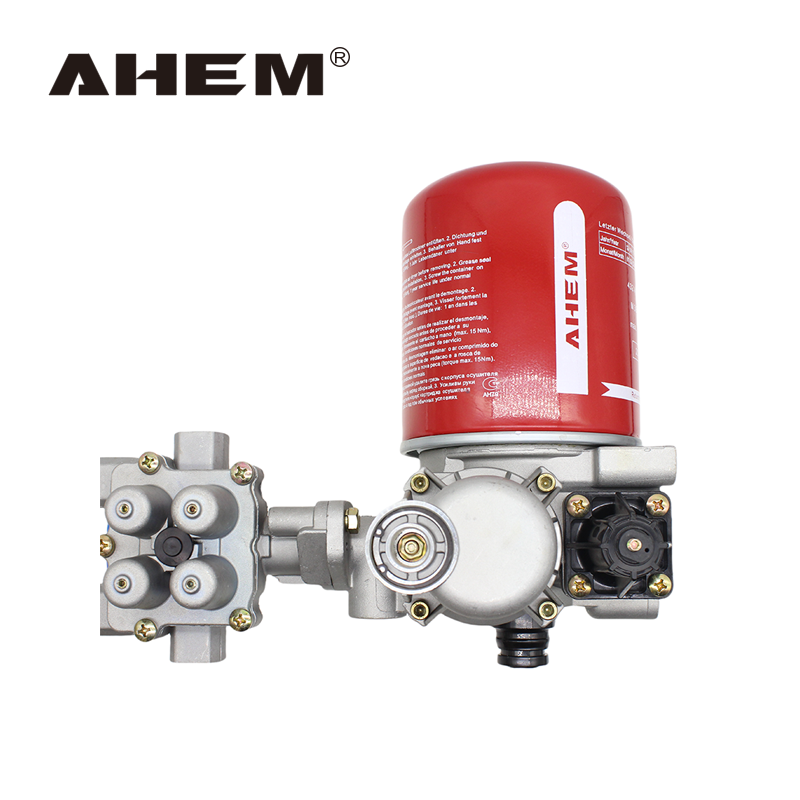
Selecting equipment based on guesswork usually results in poor performance or wasted energy. You must introduce industry-standard compliance and technical frameworks to guide your shortlisting process. The ISO 8573-1 standard provides the exact metrics needed to specify air quality correctly.
You must clearly define Pressure Dew Point (PDP). PDP measures the exact temperature at which water vapor condenses into liquid at the actual working pressure of your system. This differs entirely from atmospheric dew point, which measures condensation at normal room pressure. Always evaluate vendors based on their guaranteed PDP under specific system pressures. Never accept theoretical atmospheric conditions, as they completely misrepresent true performance.
The ISO 8573-1 framework categorizes moisture limits into strict classes. You must align your facility needs with the appropriate class.
ISO 8573-1 Class | Pressure Dew Point (°C) | Pressure Dew Point (°F) | Typical Technology Required |
|---|---|---|---|
Class 1 | -70°C | -94°F | Desiccant |
Class 2 | -40°C | -40°F | Desiccant |
Class 3 | -20°C | -4°F | Desiccant |
Class 4 | +3°C | +37.4°F | Refrigerated |
Class 5 | +7°C | +44.6°F | Refrigerated |
Class 6 | +10°C | +50°F | Refrigerated |
As shown above, Class 4 suffices perfectly for most standard shop air applications. A standard refrigerated Air Dryer easily handles this requirement. Conversely, Class 1 or 2 is strictly mandated for pharmaceutical packaging or sensitive automotive paint applications, requiring powerful desiccant solutions.
Many engineers fall into the over-specification trap. They mistakenly specify a -40°F dew point for general shop air, assuming drier always means better. This approach incurs massive unnecessary energy penalties. Producing Class 2 air takes significantly more compressor power than Class 4 air. You should specify strictly to the most critical demand. If only one machine requires -40°F, install a dedicated point-of-use unit there. Supply the rest of the plant using standard Class 4 refrigerated technology.
Procurement decisions must look beyond the initial installation. You must thoroughly analyze the long-term operational impacts, specifically focusing on energy penalties and maintenance burdens. A poorly selected system constantly drains facility resources.
Every component added to a pneumatic system inherently reduces pressure. A poorly sized unit can cause an immediate 3 to 5 PSI pressure drop across the internal heat exchangers or desiccant beds. To compensate for this loss at the point of use, operators inevitably turn up the main compressor discharge pressure. For every 2 PSI increase at the compressor, energy consumption rises by approximately 1%. You must calculate this ongoing energy penalty when comparing different models.
Desiccant systems hide a massive operational penalty: purge air consumption. Heatless twin-tower designs consume up to 15% of your total compressed air capacity just to purge and regenerate their off-line desiccant beds. This means your compressor works 15% harder just to feed the dryer itself. You can mitigate this by utilizing heated purge or blower purge options, which use external heat sources rather than compressed air to regenerate the media.
You cannot install these systems and forget them. They require rigorous, specific maintenance schedules to prevent catastrophic moisture bypass.
Refrigerated System Maintenance: Operators must regularly clean the condenser coils. Dirty coils restrict airflow, causing internal temperatures to rise and moisture to bypass. Technicians must also perform regular refrigerant top-offs and inspect the automatic condensate drain valves. A stuck drain valve floods the entire system.
Desiccant System Maintenance: The porous media degrades over time. Technicians must perform complete media replacement cycles typically every three to five years. Switching valves endure thousands of cycles and require regular rebuilding. Silencers become clogged with desiccant dust and need frequent replacements to prevent dangerous back-pressure.
Membrane System Maintenance: These units require minimal direct maintenance, but their pre-filters demand strict attention. If a coalescing filter fails, oil aerosols will permanently blind the membrane, requiring a total unit replacement.
Installing equipment into an existing plant architecture introduces several physical risks. Understanding these realities demonstrates true operational expertise and prevents costly commissioning failures.
System sizing relies heavily on environmental conditions. An equipment package perfectly sized for 70°F ambient air will fail catastrophically if installed in a poorly ventilated 100°F compressor room. Hotter air holds exponentially more moisture. You must detail the exact ambient conditions and apply manufacturer correction factors for high temperatures. Always ensure adequate ventilation around the installation site to prevent local thermal buildup.
Drying equipment does not remove compressor oil or solid particulates. You must emphasize the strict requirement for comprehensive filtration arrays.
First, install high-efficiency coalescing pre-filters. These capture oil aerosols before they enter the drying vessel. Oil coating desiccant beads ruins their adsorption capacity instantly. Oil entering a refrigerated heat exchanger acts as an insulator, destroying cooling efficiency.
Second, install particulate post-filters immediately after desiccant units. The abrasive action of air moving through the towers creates fine desiccant dust. A post-filter catches this dust before it travels downstream to score pneumatic cylinders or jam delicate instruments.
Never pipe a main unit directly inline without a contingency plan. We strongly advocate for the installation of three-valve bypass systems. This configuration uses an inlet isolation valve, an outlet isolation valve, and a center bypass valve. This layout allows your facility to maintain un-dried compressed air flow during unexpected equipment failures or routine maintenance. Bypassing the unit temporarily is usually far preferable to shutting down the entire manufacturing plant.
Preventing devastating moisture damage requires aligning the specific sensitivity of your facility equipment directly with the correct ISO 8573-1 dew point class. You must balance the need for extreme moisture removal against the heavy, ongoing energy penalties associated with purge air and pressure drops. A well-designed infrastructure defense protects your actuators, prevents pipe corrosion, and secures end-product quality.
Your next steps should begin with a comprehensive system audit. Advise your maintenance teams to log current pneumatic failure rates and inspect existing filters for water loading. Log the true inlet temperatures at your proposed installation site during peak summer conditions. Finally, consult an applications engineer to calculate the precise operational energy penalties of refrigerated versus desiccant configurations based on your exact flow rate and environmental realities.
A: When undersized, the air velocity through the unit increases significantly. This decreases the residence time needed for proper cooling or adsorption. Consequently, moisture bypasses the drying mechanism entirely and re-enters the downstream system, leading to condensation in your pipes and tools.
A: No. Inline separators only remove bulk liquid water droplets through centrifugal force. They completely fail to remove suspended water vapor. As that vapor travels downstream and cools further, it will condense into new liquid water, bypassing the separator's protection.
A: Desiccant media typically lasts between 3 to 5 years. However, this lifespan is highly dependent on your continuous operating hours and the strict efficiency of your oil pre-filtration. Even minor oil contamination will destroy the media's adsorption capabilities prematurely.
A: Generally, a properly sized and newly installed system should exhibit no more than a 2 to 5 PSI pressure drop. This measurement should account for both the drying unit itself and the necessary associated coalescing and particulate filters.
