
Views: 0 Author: Site Editor Publish Time: 2026-07-31 Origin: Site


The leveling valve serves as the critical safeguard for any heavy-duty air suspension system. It actively protects your valuable payload and the truck chassis from brutal road impacts. When this component begins failing, fleets often rush the replacement process to keep freight moving. This urgency frequently leads to poor aftermarket fitment, overworked air compressors, and even premature airbag failure. Choosing the correct replacement means moving far beyond a simple visual part match. You must carefully evaluate specific airflow rates, mounting configurations, and unique suspension demands.
In this comprehensive guide, we explore the mechanical nuances of proper valve selection. You will learn how to match flow rates to vocational needs and dodge common calibration traps. We also cover step-by-step evaluation criteria so you can secure a reliable, exact-fit component for your rig.
Replacing a faulty height control unit requires precision. Guessing specifications can trigger a cascade of mechanical failures across your fleet. Many technicians underestimate how directly pneumatic controls impact mechanical drivetrain health. Let us examine the hidden damages caused by mismatched components.
Valves use a specific "dead band" to govern airflow. This term describes the neutral zone where the valve ignores minor chassis movement. If you install a unit with an overly sensitive dead band, it constantly cycles air on uneven roads. The compressor works overtime to feed this continuous demand. It eventually burns out from the relentless duty cycle. You might fix the suspension issue but destroy an expensive compressor in the process.
Ride height directly dictates your driveline angles. An incorrect Leveling Valve specification alters the manufacturer's intended ride height. This physical shift forces the driveshaft to operate at steep, abnormal pinion angles. You will quickly notice intense vibrations inside the cab. Over time, this mechanical stress destroys U-joints and causes premature air spring fatigue.
Vocational trucks and side-dump trailers require specific exhaust speeds. A slow-dumping valve traps air during critical loading or unloading phases. This delay creates severe operational risks. If a side-dump trailer cannot exhaust air instantly, the shifting center of gravity can cause a catastrophic rollover. Fast airflow is a critical safety requirement for these specific applications.
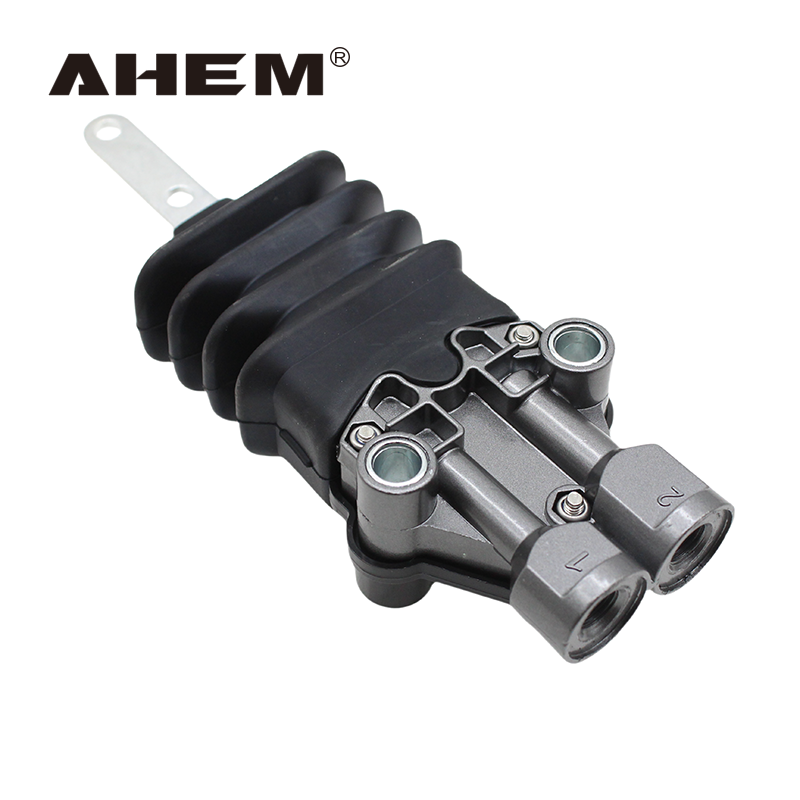
Every hauling application demands a specific pneumatic response. You must align your hardware choices with your actual operating environment. Understanding the core categories prevents costly mismatch errors down the road. You can learn more about us and how component quality impacts these operational categories.
Standard units work perfectly for typical over-the-road (OTR) dry vans and tractors. They deliver steady, predictable air management for smooth highways. They maintain chassis height without wasting onboard air reserves.
Conversely, high-flow units handle severe vocational applications. Logging trucks, agricultural rigs, and heavy-haul trailers face sudden payload changes. They require rapid inflation and deflation to stabilize the chassis instantly. A standard unit would react too slowly for a logging truck dumping its massive load.
The trucking industry standard relies heavily on a single-valve setup. It offers straightforward plumbing and reliably equalizes air pressure across both sides of the axle. Maintenance teams prefer it for its simplicity and ease of troubleshooting.
However, high-center-of-gravity loads sometimes require a dual-valve setup. Liquid tankers and severe heavy-haulers benefit greatly from improved roll stability. Yet, this dual configuration introduces complex maintenance challenges. Dual valves often "fight" each other if mechanics do not calibrate them perfectly. This fighting wastes system air and complicates diagnostic efforts.
Do not confuse cabin controls with primary chassis controls. Heavy-duty chassis valves manage massive air volumes for the primary suspension system. They support tens of thousands of pounds. Cabin height control valves operate at significantly lower flow rates. They simply cushion the driver's compartment for operator comfort.
| Application Type | Recommended Valve Style | Primary Benefit | Common Use Cases |
|---|---|---|---|
| Standard Highway | Single, Standard-Flow | Easy calibration, steady ride | OTR Dry Vans, Standard Tractors |
| Vocational / Off-Road | Single, High-Flow | Rapid pressure adjustment | Logging, Agriculture Dump Trucks |
| High Center of Gravity | Dual, High-Flow | Independent side-to-side roll control | Liquid Tankers, Severe Heavy-Haul |
You need specific evaluation criteria to shortlist replacement parts effectively. Small structural differences drastically alter how the suspension behaves under heavy loads. Always verify these technical features before authorizing a purchase.
Always match the primary delivery, supply, and exhaust ports exactly. Standard sizes usually fall between 1/4" NPT and 3/8" NPT across major brands. If you buy a mismatched unit, you must use restrictive adapters. These adapters physically choke the air supply. They alter intended flow rates and completely negate the benefits of a high-flow system.
Many modern trailers utilize an integrated dump feature for quick loading. You must determine if your setup requires a normally open (NO) or normally closed (NC) integrated dump valve. An incorrect dump configuration reverses the intended logic. The suspension might deflate when you apply power. This creates immediate and dangerous ground clearance issues.
Housing material directly determines longevity in specific environments.
Consider how the unit securely mounts to the vehicle frame. Fixed vertical or horizontal mounts require exact OEM brackets to align correctly. Universal designs often feature 180-degree adjustable lever arms. Universal arms grant incredible flexibility during roadside installation. However, they require careful cutting and measuring to function correctly without binding.
Even the best hardware fails if technicians install it improperly. Mechanics face specific pitfalls during the physical swap and subsequent calibration phases. Avoiding these common mistakes actively preserves your driveline and air system.
Many technicians install a brand-new valve but immediately reuse the old linkage rod. This represents a critical mechanical mistake. Linkage rods wear out at the rubber joints. They also bend slightly over millions of suspension cycles. Reusing a worn linkage rod introduces unacceptable play into the new system. It completely negates the tight calibration of your new component. Always replace the linkage when replacing the main housing.
Never eyeball the chassis stance during a replacement. You must strictly use the manufacturer's exact ride height specifications. This critical measurement usually spans from the center of the axle to the bottom of the frame rail. Being off by just one inch shifts driveline angles dramatically. Use a proper measuring block. Set the height exactly to the engineering manual limits.
Post-installation road testing must explicitly verify the neutral zone. Apply weight to the bumper or frame to safely engage the lever. The system should not react to microscopic movements. If it over-reacts to minor road bumps, the dead band is too narrow. You might need to adjust the lever arm length to widen the acceptable motion range. This simple test protects your compressor from rapid cycling.
Navigating supplier catalogs feels overwhelming without a structured approach. Use this step-by-step logic to secure the exact pneumatic control your fleet requires. Following this sequence prevents costly returns and extended bay times.
A height control unit functions as a highly precise pneumatic instrument. Treating it as a generic, uncalibrated piece of hardware actively invites systemic fleet issues. To maintain peak operational safety and mechanical longevity, always prioritize component accuracy.
First, mandate exact OEM specification matching for air flow and port size to maintain the integrity of your driveline angles. Second, always replace the linkage rod simultaneously to ensure your precise ride height calibrations hold true under heavy loads. Third, audit your operational needs carefully. Upgrade to high-flow options only if your vocational environment truly demands rapid air exhaustion.
When in doubt, choose exact-fit replacements over universal kits to minimize bay downtime and prevent complex calibration headaches. Take the time to measure your current axle-to-frame baseline before placing any parts order. By executing a diligent technical review, you safeguard your heavy-duty assets and guarantee maximum fleet uptime on the road.
A: Common symptoms include your truck leaning heavily to one side or the chassis sitting lower than usual. You may also hear audible, continuous air leaks at the exhaust port. Additionally, if your air compressor runs constantly or you experience severely delayed ride height recovery after unloading, the valve's internal seals have likely failed.
A: It is generally only recommended for highly specialized applications with severe off-center loads, such as liquid tankers. For standard OTR freight hauling, adding a second unit causes more calibration headaches than tangible benefits. Dual setups often cause the valves to fight each other, wasting compressed air and complicating maintenance.
A: Once it is properly set to the manufacturer's ride height during initial installation, it rarely requires further adjustment. You generally only need to recalibrate it if the linkage components wear out, if the mounting brackets loosen, or if major suspension modifications occur on the chassis.
A: Yes, they are reliable when installed correctly. They work exceptionally well for emergency roadside repairs or for fleets operating mixed truck brands. However, their reliability depends entirely on the installer accurately cutting the linkage rod to the correct length and perfectly adapting the port fittings to avoid air restrictions.
