
Views: 0 Author: Site Editor Publish Time: 2026-05-21 Origin: Site


An air brake valve is never just a routine replacement part on a commercial vehicle. It serves as the absolute critical failure point between a controlled, safe stop and a catastrophic fleet accident. Modern commercial vehicle braking demands incredibly precise air pressure distribution across multiple axles. Installing a valve featuring an incorrect specification—such as the wrong crack pressure—leads directly to trailer brake lag, dangerous wheel lockup, and immediate DOT compliance violations. A mismatched component compromises the entire pneumatic architecture. This guide delivers a technical, evidence-based framework tailored for fleet managers and heavy-duty technicians. You will learn how to evaluate, select, and procure the exact components required for your fleet. We break down decision criteria based on your specific load dynamics, driving terrain, and strict regulatory standards. Proper selection protects your drivers, your cargo, and your business operations.
Selecting an air brake valve requires matching specific "crack pressure" thresholds to the vehicle’s existing pneumatic architecture.
Operating environments dictate material choices; extreme cold or mountainous terrains require specialized sealing and integration with a high-capacity air dryer.
Regulatory compliance (DOT/FMCSA) demands fail-safe mechanisms, including dual-circuit integrity and reliable protection valves.
OEM compatibility and ISO/SAE certifications are non-negotiable baselines for commercial fleet procurement.
Substandard parts introduce severe operational risks for any commercial fleet. Slight variations in air delivery speed create massive mechanical imbalances across the vehicle. These imbalances lead to uneven brake pad wear over time. You might also notice the trailer "pushing" the tractor during hard stops. This pushing effect degrades handling and causes premature tire degradation. Fleet operators cannot afford these cascading mechanical failures.
Regulatory agencies monitor brake performance strictly during roadside inspections. Improper brake timing ranks high among leading causes for FMCSA out-of-service violations. Air leaks trigger similar immediate penalties. Inspectors measure pressure drops meticulously. They issue citations if they detect system inefficiencies. You lose money every minute a truck sits idle under an out-of-service order.
Commercial pneumatic systems rely on robust fail-safe mechanics. System pressure must remain above specific thresholds to operate normally. If system pressure drops significantly—typically around 60 PSI—the dashboard triggers an audible alarm. Should the pressure continue falling, the system must seamlessly trigger the spring brakes. This emergency mechanism prevents deadly vehicle runaways. Quality components ensure this fail-safe actuates perfectly every single time.
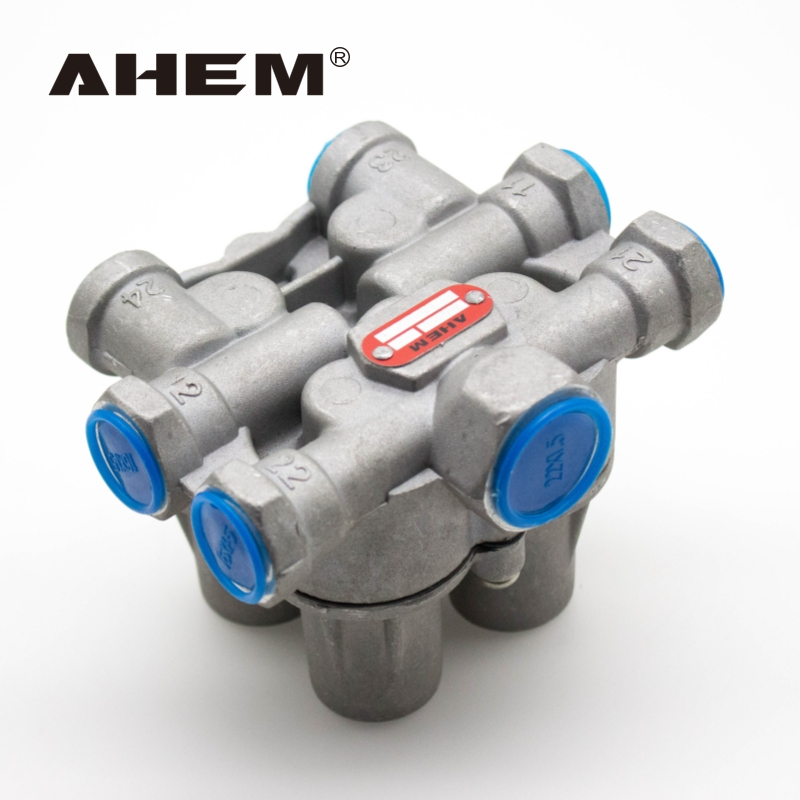
Fleet technicians must break down the pneumatic control system into distinct decision categories. This approach helps buyers identify exactly what they need to replace. You cannot install a universal part and expect optimal performance. Different components handle completely different pneumatic routing tasks.
The Foot Brake Valve functions as the primary dual-circuit command center inside the cab. Drivers rely on it for consistent, predictable stopping power. It requires precise treadle feedback to operate smoothly. The unit must provide proportional air delivery simultaneously to both front and rear axles. A failing unit feels spongy and creates dangerous stopping delays.
Drivers use a Hand Brake Valve for independent trailer brake control. This component is crucial for stabilizing heavy combinations on steep grades. It also provides essential control during coupling or uncoupling procedures. Independent application prevents jackknifing when descending slippery mountain roads. It sends a separate signal directly to the trailer relays.
Modern trucks use a Protection Valve to isolate sudden system failures. Suppose one air reservoir develops a massive leak. The protection valve immediately closes off the compromised section. It preserves compressed air in the remaining intact circuits. This isolation maintains baseline stopping power so the driver can safely pull over.
These components execute a very specific physical mission. They accelerate air delivery and exhaust functions across long vehicle wheelbases. Their primary goal is eliminating the dangerous "time lag" between the tractor and the rear of the trailer. When a driver releases the pedal, quick-release components dump the air locally. This prevents the brakes from dragging.
Buyers must adopt a skeptical, feature-to-outcome evaluation framework. Flashy marketing means nothing if the part fails under extreme stress. Focus on technical specifications over brand hype.
Crack pressure defines the exact PSI required to open a valve and allow air flow. Matching the exact OEM crack pressure is strictly required. If you install a replacement possessing a lower threshold, the brakes engage too early. This causes aggressive brake grabbing. If the threshold is too high, you experience delayed engagement.
Diagnostic Chart: Crack Pressure Symptoms | ||
Crack Pressure Status | Physical Symptom | Operational Consequence |
|---|---|---|
Too Low (vs OEM) | Brakes apply before the pedal is fully depressed. | Trailer wheel lockup, flat-spotted tires, harsh ride. |
Too High (vs OEM) | Pedal feels unresponsive during initial travel. | Trailer pushes the tractor, extended stopping distance. |
Matched (OEM Spec) | Smooth, synchronized application across all axles. | Even pad wear, safe handling, predictable stopping. |
Material choice dictates long-term durability. We strongly recommend brass or treated steel for high-stress pneumatic connections. Brass resists galvanic corrosion exceptionally well. Heavy torque during installation often strips the threads on cheaper polymer housings. Polymer components save weight but often crack under freezing temperatures or high-vibration scenarios.
Fleet buyers must demand verifiable ISO/SAE manufacturing standards. Do not accept generic "meets OEM specs" claims from unverified suppliers. Ask for the actual audit certificates. True commercial-grade parts undergo rigorous cycle testing. They must endure millions of applications without internal seal failure.
You must verify the practical installation reality before purchasing. Incorrect thread pitches cause endless headaches in the shop. Mixing NPT (National Pipe Taper) threads and Metric threads leads directly to micro-leaks. These tiny leaks drain the air tanks overnight. They guarantee an immediate DOT failure during the next roadside inspection.
You cannot spec a truck operating in the desert the same way you spec one running in the arctic. Environmental variables completely alter pneumatic performance parameters.
Heavy-haul or liquid-bulk fleets face unique physical challenges. Liquid surges forward violently during a hard stop. These operations require fast-acting, high-capacity relay valves. High-capacity units manage shifting kinetic energy much better compared to standard dry van operations. They dump air rapidly to adjust to dynamic weight transfers.
We must contrast flatland driving against mountainous routes. Flatland driving places minimal thermal stress on the braking system. Mountainous terrain demands parts featuring superior heat-fade resistance. Long descents require faster exhaust capabilities to prevent brake shoe glazing. Technicians must select high-flow options for alpine routes.
Winter weather threatens pneumatic lines constantly. Moisture entering the system freezes rapidly when temperatures drop. Ice blocks the internal orifices entirely. Even top-tier components will fail without proper upstream integration. You must pair them with a functional Air Dryer and heated drain valves. The dryer strips moisture from the compressed air before it reaches sensitive control mechanisms.
Procuring the right part solves only half the equation. Improper installation or misdiagnosis ruins the investment quickly. Fleet technicians must follow strict protocols.
We heavily warn against assuming a new part fixes underlying system issues. Replacing an air control unit won't correct improper slack adjuster calibration. It also cannot fix a failing, oil-passing compressor. Mechanics must diagnose the entire pneumatic circuit. Swapping parts blindly wastes time and hides the actual root cause of the brake failure.
Technicians must execute a rigorous post-installation operational check. Never send a truck back onto the highway without verifying the repair physically.
Verify air build-up times: The compressor must raise tank pressure from 85 PSI to 100 PSI within 45 seconds at maximum RPM.
Listen for exhaust hiss: Apply the brakes fully and hold the pedal. Walk around the vehicle listening for continuous air leaks.
Check governor cut-out limits: Ensure the compressor stops pumping exactly when the system reaches the maximum regulated pressure (usually 120-130 PSI).
Test the emergency pop-out: Pump the brakes repeatedly to bleed the tanks. Verify the dash valves pop out automatically between 20 and 45 PSI.
Following this checklist guarantees the newly installed component interacts correctly within the broader pneumatic architecture.
Choosing the correct replacement component remains an essential exercise in risk mitigation. The process demands precise alignment alongside vehicle specs, driving terrain, and strict compliance laws. A haphazard approach invites catastrophic failure and steep regulatory fines. Fleet managers must treat these components as critical safety infrastructure.
Buyers should actively audit their current system’s failure points before making purchasing decisions. Confirm exact crack pressures matching your original equipment. Always source components only from suppliers providing transparent material data and rigorous testing certifications. Protect your fleet by rejecting unverified aftermarket substitutes.
We strongly encourage readers to consult their vehicle’s official pneumatic schematic before ordering parts. Speak directly with a certified heavy-duty parts specialist. A short technical consultation easily prevents costly installation mismatches. Prioritize safety, verify specifications, and equip your fleet for maximum reliability on the road.
A: A continuous exhaust leak is typically caused by an internal O-ring failure. It also occurs frequently due to severe contamination from a bypassed air dryer. In some cases, the problem originates elsewhere; back-pressure from a failing secondary component, like a ruptured spring brake chamber, forces air backward through the exhaust port.
A: Crack pressure determines the exact moment the brakes engage. If the relay valve's crack pressure is too high, the trailer brakes apply too late, causing the heavy trailer to push the tractor. If the setting is too low, they apply too early, causing violent trailer wheel lockup and accelerated tire wear.
A: It must be replaced immediately if it fails to isolate a simulated air leak in one circuit during routine testing. You also must replace it if it fails to trigger the dashboard low-pressure warning and spring brake deployment at the strict regulatory PSI threshold.
